
Delaware County Warrant Search Channels
The research found no official Delaware County public database that confirms all active warrants in real time. The safe access path is phone-first. Sheriff Tony Skinner's contact page lists warrants at 765-747-7807, the sheriff office at 765-747-7885, dispatch at 765-747-7878, and jail at 765-747-7870. The county warrant-scam alert also says a person concerned about a possible warrant can call the Sheriff's Office at 765-747-7885 or the Court Administrator's Office at 765-747-7734. Circuit Court warrant paperwork and copies route through the Delaware County Justice Center and Rick Spangler's Clerk of the Circuit Courts when the record is public and eligible for copy release.
The official warrant-scam alert source gives Delaware County warrant concern numbers and warns against cash-demand phone calls.
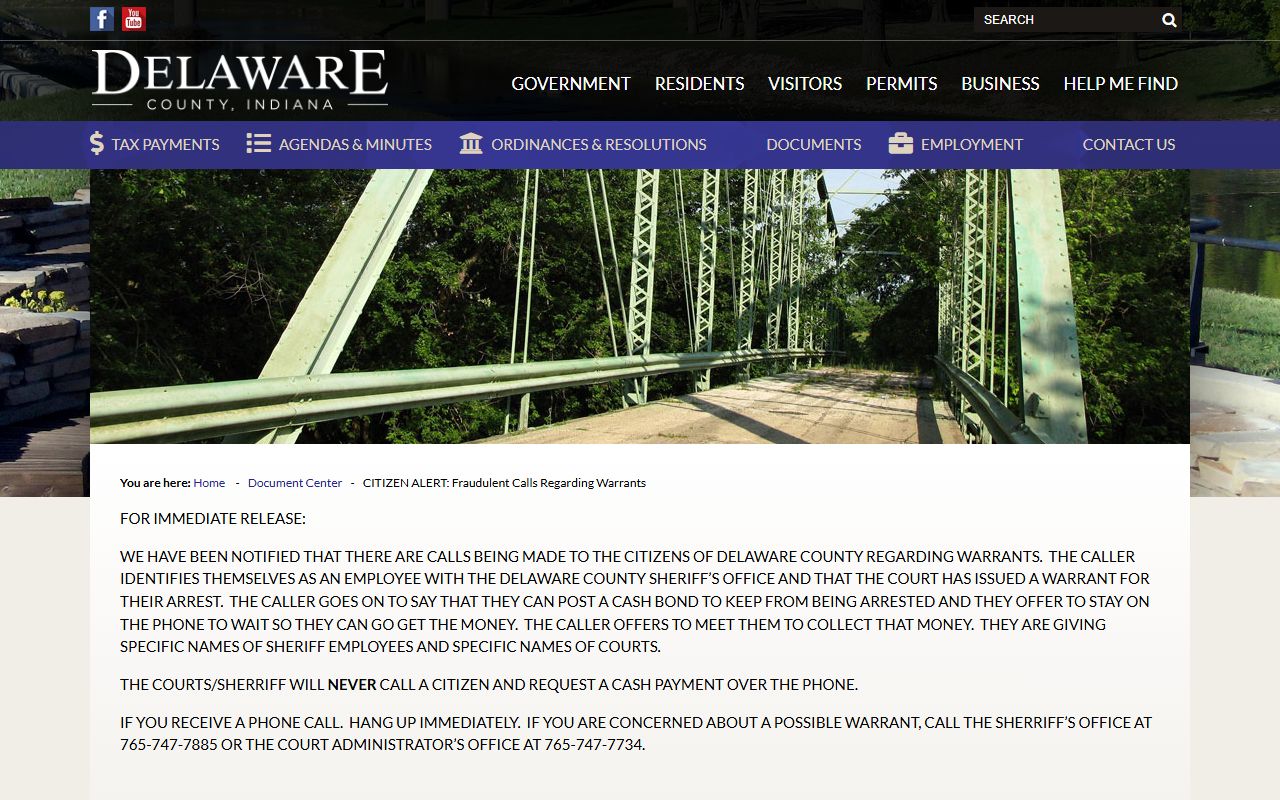
That alert is the key local warrant source because it tells residents to verify through official numbers instead of paying callers.
| Access Channel | Use For | Official Detail |
|---|---|---|
| Sheriff warrants line | Active warrant confirmation and safe instructions | 765-747-7807 |
| Sheriff office | General warrant concern and official verification | 765-747-7885 |
| Court Administrator | Court-related warrant concern noted in the scam alert | 765-747-7734 |
| MyCase | Public case clues, missed hearings, bond, court orders, and docket entries | Not a real-time active-warrant database |
| Muncie City Court | Bench warrants tied to city misdemeanors, infractions, ordinances, or probation | 765-747-4703; City Clerk questions 765-747-4831 |
Types of Delaware County Warrants
Delaware County warrant records can arise from criminal filings, missed hearings, probation issues, city-court matters, or law-enforcement investigations. A bench warrant is usually tied to a missed court date or failure to comply with a court order. An arrest warrant authorizes custody. A probation warrant can follow a claimed violation of supervision. A search warrant is different because it authorizes a search of a place, item, or device, and it may be sealed while an investigation is active.
- Arrest warrant: issued by a court to authorize arrest on a criminal matter.
- Bench warrant: issued by a judge after missed court, noncompliance, or failure to appear.
- Failure-to-appear warrant: often tied to a missed hearing, citation, or court date.
- Probation warrant: tied to alleged violation of probation terms.
- Search warrant: authorizes a search and may not be public while active.
- Civil or body attachment: may be used in certain civil enforcement contexts.
Delaware County Sheriff Most Wanted
The Delaware County Sheriff's Office has an official Most Wanted page. It is a public wanted-person resource, but it is not a complete warrant database. A person may have a warrant and not appear on the list, and a listing should still be confirmed through the sheriff or court. The Most Wanted page can provide names and descriptive details where the sheriff chooses to publish them.
The sheriff contact table source lists warrant, jail, dispatch, public defender, prosecutor, and other phone numbers tied to Delaware County warrant questions.
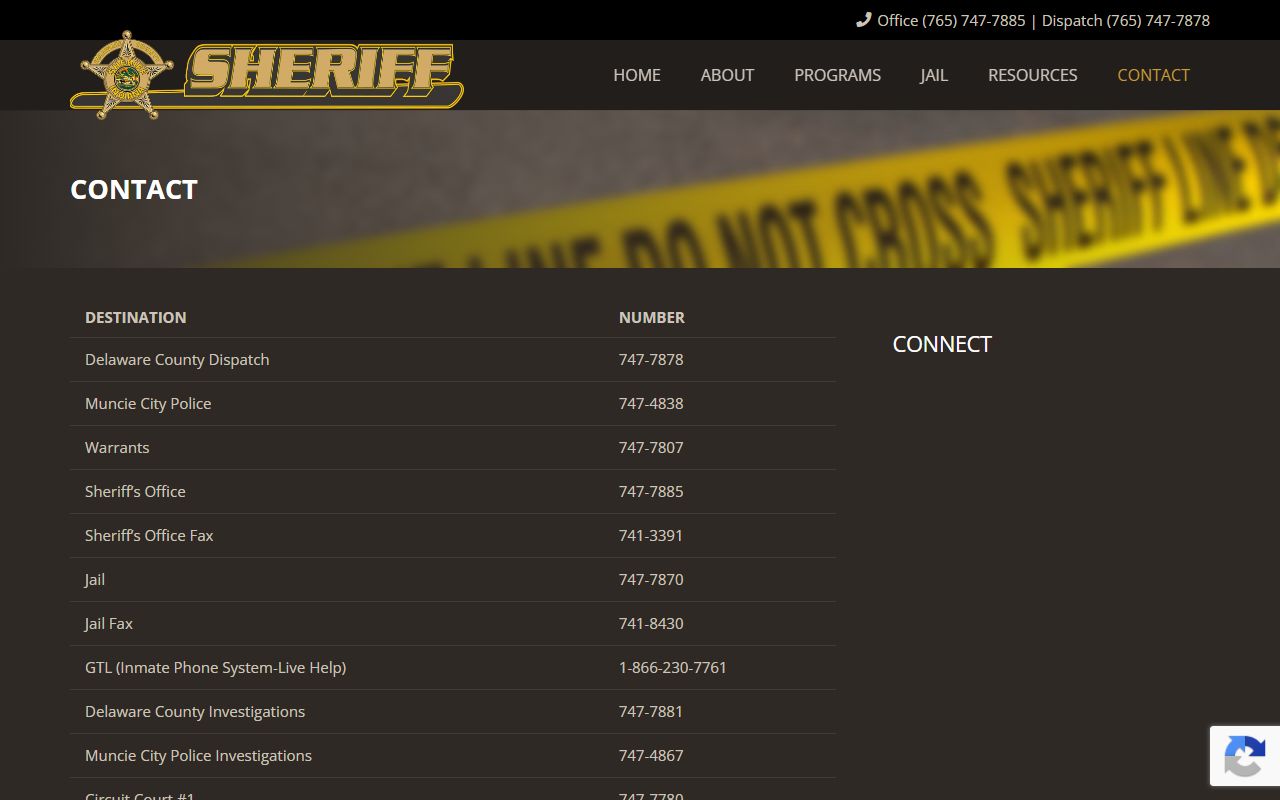
The contact table is more complete than a wanted list because it gives the phone fallback for active warrant concerns.
The sheriff most wanted source is the official wanted-person page for Delaware County warrant research.
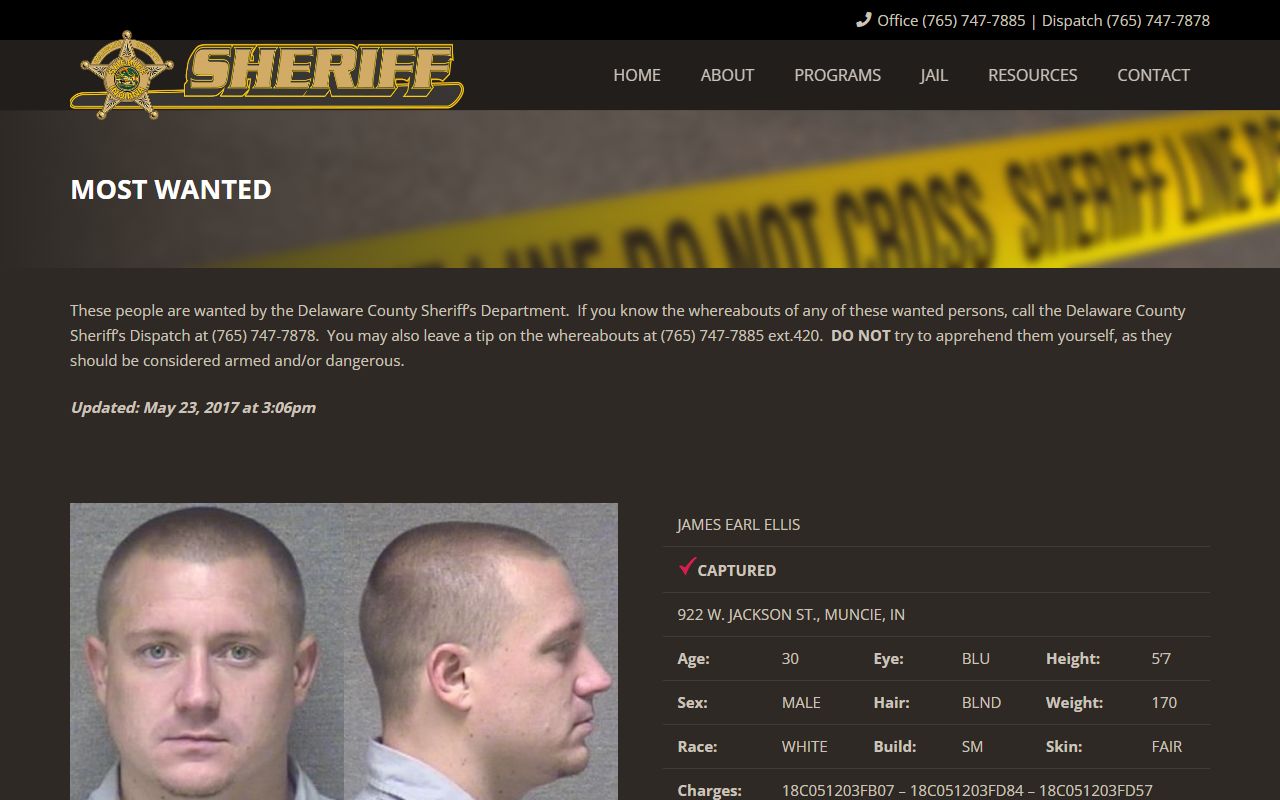
Most Wanted listings are useful leads, but active warrant status should still be verified by phone with the sheriff or court.
Delaware County Warrant Clues in Court Records
MyCase may show public docket clues related to Delaware County warrants. Those clues can include failure-to-appear entries, bench warrant entries, bond, hearing dates, court orders, or later recall and quash entries. MyCase should not be treated as a real-time warrant confirmation system. It is a court-record search. A case can be updated after a warrant is served, recalled, or cleared, and a direct phone check is still the safer route.
Muncie City Court matters deserve separate attention. The City Court has countywide geographic jurisdiction for criminal misdemeanors, state infractions, and city ordinance violations. Bench warrants for missed city-court dates, probation matters, infractions, or ordinance cases may require Muncie City Court or City Clerk contact rather than the Delaware County Clerk counter.
The Muncie court information source explains that City Court records are maintained through the City Clerk and points users to MyCase and payment information.
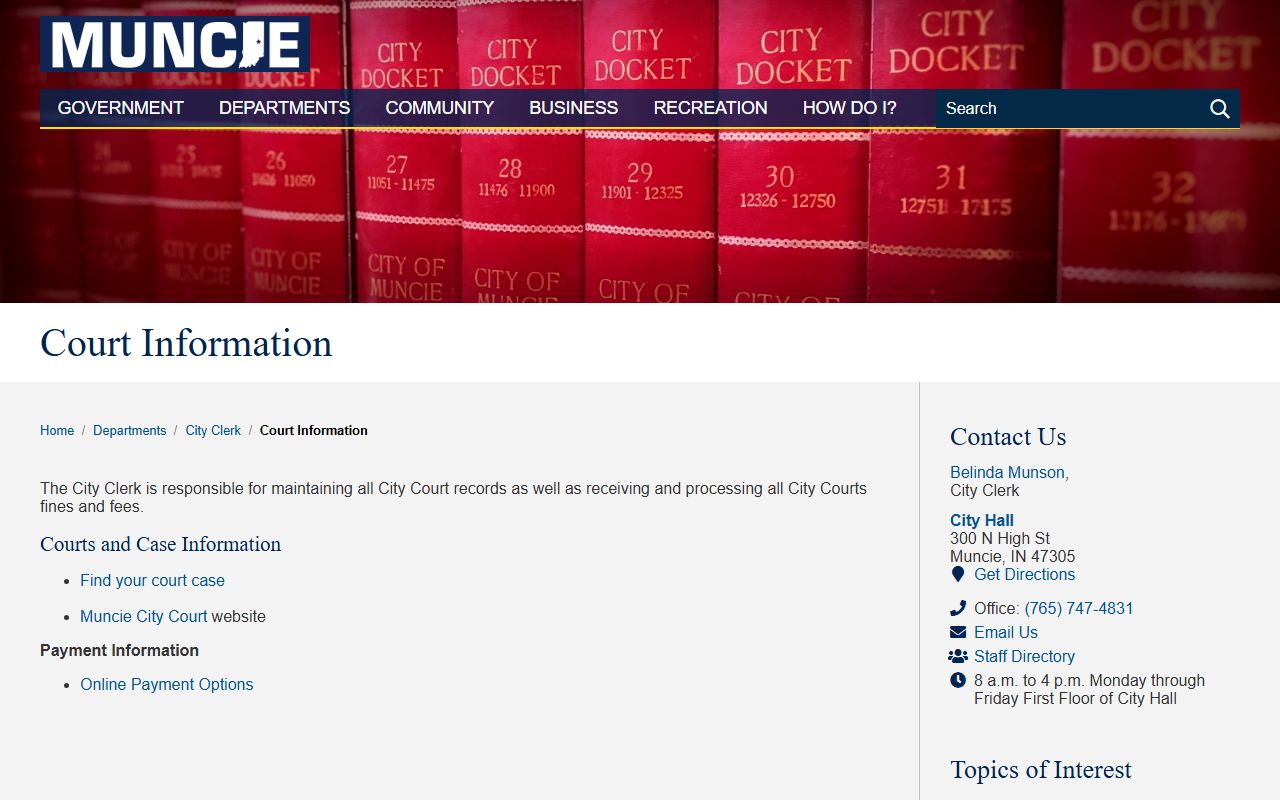
That city-court split is important because city fines and city-court records do not route through the county clerk in the same way.
The Muncie City Court source gives local court jurisdiction, schedule, and contact context for bench-warrant research.
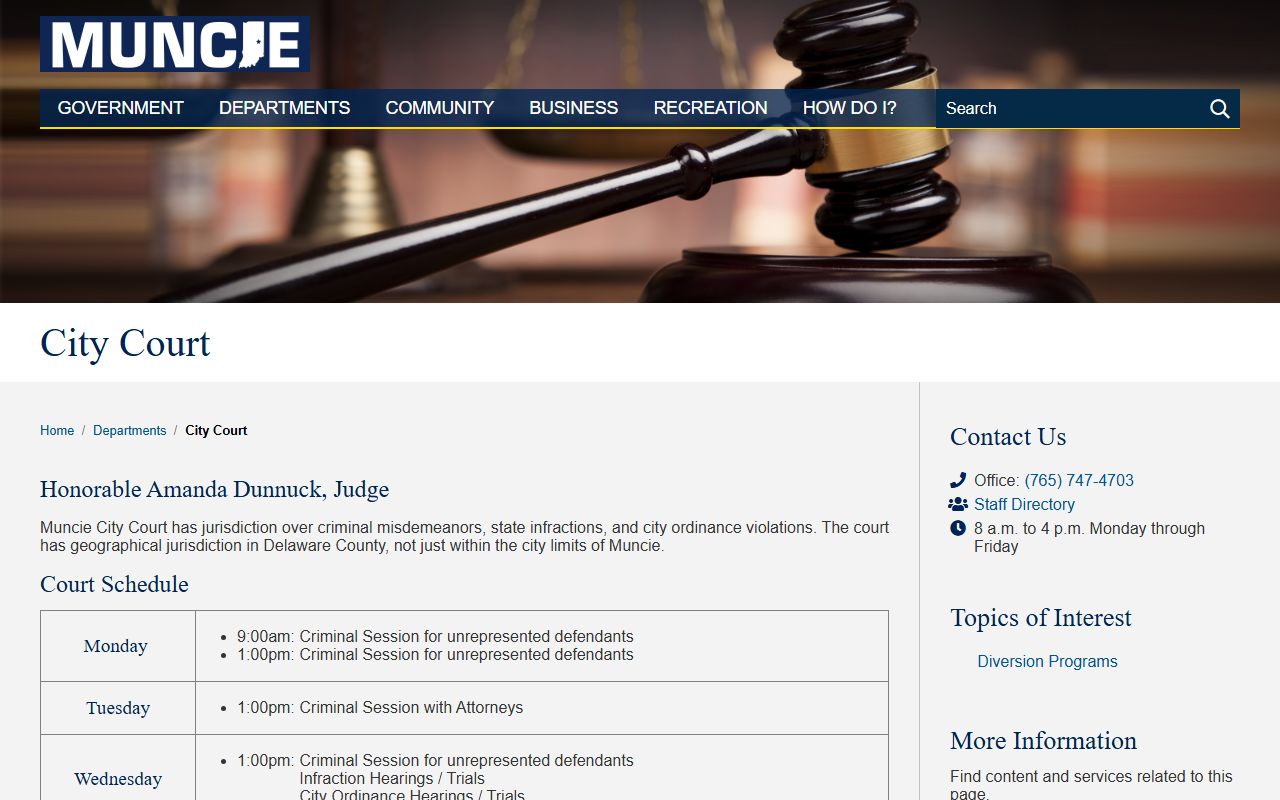
City Court schedule and jurisdiction details help explain why a missed infraction, ordinance, or misdemeanor date can become a warrant issue.
What Delaware County Warrant Records Show
Public warrant information varies by source. A court docket may show only the warrant-related event, court, case number, bond, and later status. A sheriff Most Wanted listing may show descriptive person details and offense information selected for publication. Search warrants, juvenile matters, sealed records, and active investigative material may be withheld. A warrant record should be read with the issuing court and current status in mind.
| Field | What It Shows |
|---|---|
| Person Name | The person connected to the warrant or wanted notice. |
| Warrant Type | Arrest, bench, failure to appear, probation, search, fugitive, or body attachment where public. |
| Case Number | The related court case number if tied to a filed case. |
| Issuing Court | Delaware Circuit Court, Muncie City Court, Yorktown Town Court, or another court where applicable. |
| Underlying Charge | The offense, violation, or court matter connected to the warrant. |
| Bond | Bond amount or no-bond status if public and current. |
| Status | Active, served, recalled, quashed, cleared, or updated status where shown. |
Resolve a Delaware County Warrant
Do not pay anyone who calls demanding cash for a warrant. The Delaware County alert says courts and the sheriff will never call a citizen requesting cash payment over the phone. Hang up and call the sheriff or court number directly from an official source. If a warrant is possible, ask for safe instructions before appearing at a courthouse, jail, or police agency.
- Call the sheriff warrants line at 765-747-7807 or the sheriff office at 765-747-7885.
- Call the Court Administrator at 765-747-7734 if the concern fits the county warrant-scam alert.
- Search MyCase for the related case, missed hearing, bond, or court order if the case is public.
- Contact Muncie City Court or the City Clerk if the matter is a city-court misdemeanor, infraction, ordinance, or probation issue.
- Ask the court, jail, or sheriff about allowed bond or payment methods instead of assuming clerk payment rules apply.
- After resolution, verify that the court recalled, quashed, or updated the warrant entry.
Important: Active warrant questions should be confirmed by official phone contact, not by relying only on an online docket.
Restricted Delaware County Warrant Records
Some Delaware County warrant records are not public. Search warrants can be sealed during an investigation. Juvenile matters can be restricted under Indiana juvenile-record law. Sealed or expunged criminal records can be removed from ordinary public access. Protection-order related data may use separate public-access rules because protected-party identifiers are excluded from ordinary online search.
There was no official Indiana public statewide active-warrant database located in the research file, and no official Delaware County Sheriff or Muncie Police app was found. Use the web roster, Most Wanted page, MyCase, sheriff phones, and court phones that the research documents. For federal warrants or federal criminal cases, county warrant pages and MyCase are not the official record channel.
Note: A Most Wanted listing, docket clue, or old warrant entry should never be treated as current proof without official confirmation.