
Delaware County Criminal Court Records
A Delaware County criminal court record is the case file kept by the court once a criminal prosecution begins. It is not just a charge list. It can include the charging document, docket entries, initial hearing, counsel appointment, bail, discovery activity, motions to dismiss or suppress, plea agreements, trial settings, verdict, disposition, sentence, restitution, probation, and later post-conviction or sentence-modification entries. Rick Spangler, the Clerk of the Circuit Courts, maintains trial-court records at the Delaware County Justice Center, while the prosecutor represents the State in felony and misdemeanor prosecutions. Sheriff Tony Skinner's office handles separate custody and jail records.
Criminal cases may be heard in Delaware Circuit Court or Muncie City Court depending on the offense and venue. Delaware Circuit Court handles the county's primary trial-court criminal work. Muncie City Court has countywide geographic jurisdiction for criminal misdemeanors, state infractions, and city ordinance violations. City Court records are maintained through the Muncie City Clerk, while Circuit Court certified copies come from the Delaware County Clerk of the Circuit Courts.
Search Delaware County Criminal Records
Use Indiana MyCase for public Delaware County criminal court records. MyCase can show public case information, CCS docket entries, charges, hearing dates, dispositions, and final criminal orders where available online. It is the best first step for filed criminal cases, but public documents that are not linked must be requested from the maintaining clerk. For a closer look at the charge list and charge status after arrest, use the Delaware County arrest records and court charges context on court charge records.
- Open MyCase and search by case number, defendant name, attorney, citation number, or cross-reference number.
- Confirm the court is a Delaware County court, such as Delaware Circuit Court or Muncie City Court.
- Open the criminal case and review the CCS, charge list, hearing entries, disposition, and financials.
- Check whether final orders or public documents are linked in the docket.
- Request certified copies from the Clerk of the Circuit Courts or Muncie City Clerk when official proof is required.
The sheriff also offers limited criminal history checks for citizens in unincorporated Delaware County, with a $10 fee in the research file. A limited criminal history is not the same as a court case record. The Indiana State Police limited criminal-history search is a separate statewide background channel, while MyCase remains the court-record lookup.
The limited criminal history source is useful when a person needs a sheriff criminal-history channel instead of a filed Delaware County criminal court record.
That distinction keeps criminal-history requests separate from the court file, which is searched and copied through court channels.
Delaware County Criminal Case Stages
The Delaware County Prosecutor's criminal justice material explains the path from charging to sentence. Only the prosecutor has authority to file or dismiss charges. At an initial hearing, the judge reads the charges, advises rights, determines whether counsel should be appointed for an indigent defendant, addresses bail, enters a preliminary not-guilty plea, and sets the omnibus date. The omnibus date controls later criminal pleadings and motion deadlines in Indiana practice.
Case flow: Charges Filed › Initial Hearing › Discovery and Motions › Plea or Trial › Disposition › Sentencing.
| Stage | What Happens in the Criminal Court Record |
|---|---|
| Charges Filed | The prosecutor files the criminal accusation, and the case opens in court. |
| Initial Hearing | Charges, rights, counsel, bail, preliminary plea, and omnibus date are addressed. |
| Discovery and Motions | Police reports, witness lists, evidence issues, motions to suppress, and other filings appear on the docket. |
| Plea or Trial | The case resolves by plea agreement, bench trial, jury trial, dismissal, or other disposition. |
| Sentencing | The court enters jail, prison, probation, restitution, fines, costs, and other sentence terms after conviction. |
The prosecutor criminal-process source supplies the local Delaware County case-stage detail used for criminal court records.
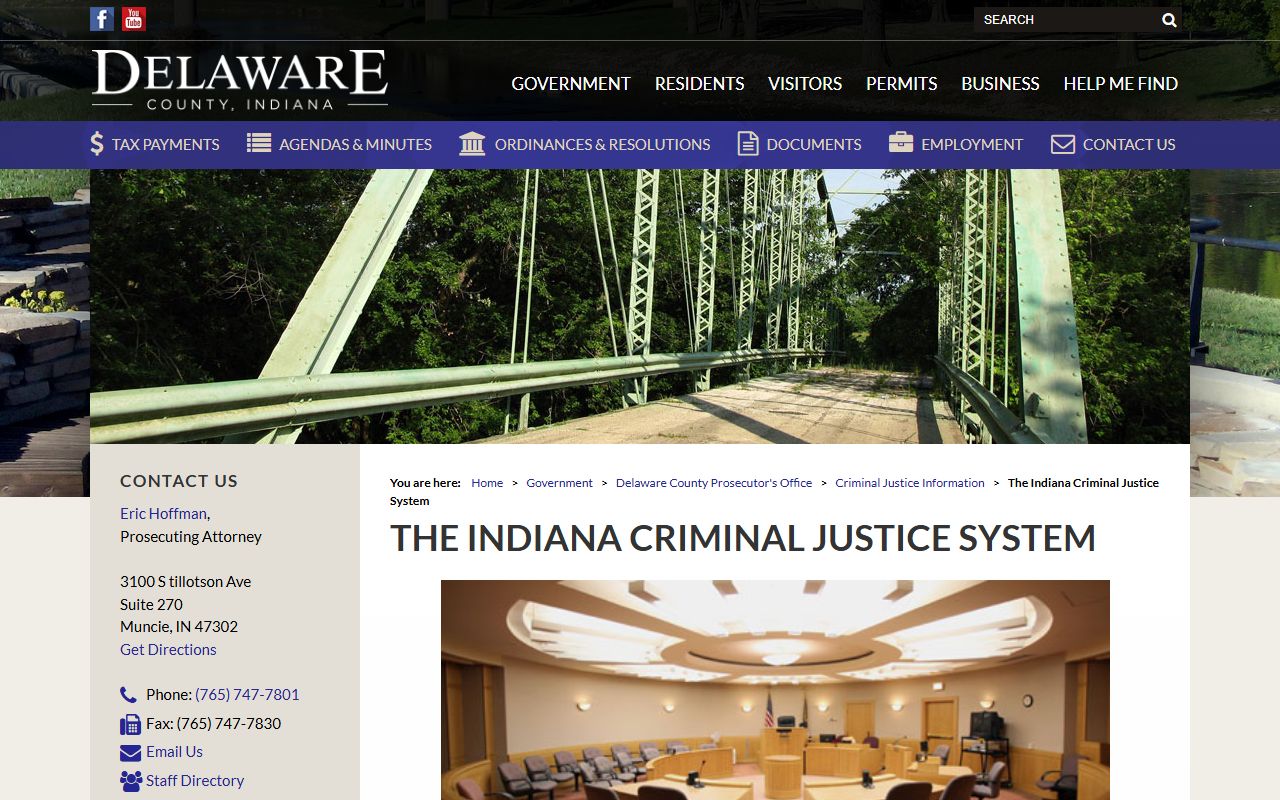
Those process points help explain why a criminal court record can show the same case at several different stages before final sentence.
What Delaware County Criminal Records Show
Public Delaware County criminal court records commonly show the case number, court, defendant name, attorney, prosecutor, charge count, statute, offense description, felony or misdemeanor level, filing date, bond, hearing dates, judge or magistrate, CCS entries, plea, disposition, sentence, restitution, probation, costs, and linked documents where allowed. A charge count is one separate accusation. A disposition is the outcome for a count or case. A sentence is the punishment ordered after conviction.
| Field | What It Shows |
|---|---|
| Case Number | The Indiana-format identifier for the criminal case. |
| Defendant | The person charged in the criminal court case. |
| Charges | Counts, statutes, offense descriptions, severity levels, and filing or disposition dates. |
| CCS | The chronological docket for filings, hearings, motions, orders, pleas, and sentencing. |
| Bail or Bond | Release amount or conditions where public. |
| Disposition | Guilty, not guilty, dismissed, acquitted, deferred, amended, or other outcome where shown. |
| Sentence | Jail, prison, probation, fines, costs, restitution, or other court-ordered terms. |
Delaware County Charges vs Convictions
Being charged is not the same as being convicted. A Delaware County criminal court record can show charges that were later amended, reduced, dismissed, or resolved by plea. It can also show a charge that ended in acquittal or a conviction. Read each count separately because one case can contain several charges with different outcomes. The criminal court record should be read through the disposition and sentence fields before drawing a conclusion.
| Point | Charge | Conviction |
|---|---|---|
| Meaning | Formal accusation filed by the prosecutor. | Guilty plea or guilty finding accepted by the court. |
| Timing | Appears near the start of the court case. | Appears after plea, trial, or other final action. |
| Record Reading | Check status, amendments, and dismissal entries. | Check sentence, restitution, probation, and post-conviction entries. |
Delaware County Criminal Court Offices
Delaware County uses the title Prosecuting Attorney, not District Attorney. Eric M. Hoffman is the Delaware County Prosecuting Attorney for the 46th Judicial Circuit. The Delaware County Prosecutor source describes felony and misdemeanor criminal cases, traffic and other state-law infractions, juvenile delinquency, child support matters, violent crime, drug dealing, firearms offenses, habitual offenders, adult protective services matters, and other prosecuted cases.
The prosecutor biography source identifies Eric M. Hoffman and the office background tied to Delaware County criminal court records.
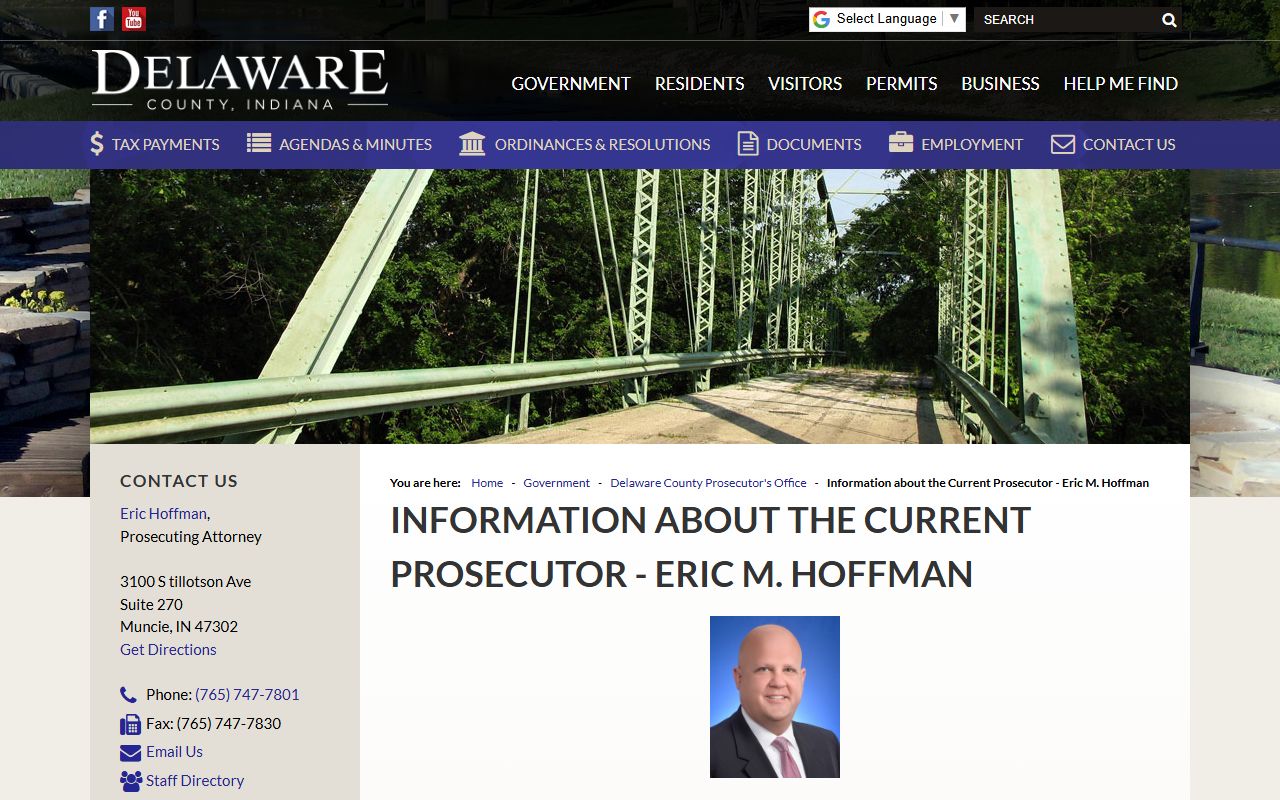
The biography confirms the local prosecutor role behind formal charges, while the court docket remains the record of what the court does with those charges.
Victim advocacy is also part of the prosecutor's work. The office describes resource referral, court accompaniment, victim-impact information, restitution help, and victim-rights support. The sheriff contact table lists the Public Defender at 765-281-9451, and the prosecutor process material says a public defender may be appointed if a defendant is found indigent at the initial hearing.
The victim advocacy source is part of the official criminal-court context for victims and restitution entries.
Victim and restitution details may affect docket entries, but confidential victim information can be restricted from public records.
Delaware County Sealed Criminal Records
Indiana expungement and sealing rules can restrict eligible arrest and conviction records. In Delaware County, a person usually files in the court or county tied to the arrest or conviction. The needed path depends on whether the matter was an arrest without conviction, a misdemeanor, an eligible Level 6 felony, or a more serious felony. Case number, charge, disposition, sentence completion, payment status, waiting period, and prosecutor consent can matter.
| Point | Sealed | Expunged |
|---|---|---|
| Public Visibility | Restricted from ordinary public access by order or rule. | Removed or limited from public access as the statute directs. |
| Record Existence | The record still exists, but public viewing is limited. | The record is not necessarily destroyed; some agencies may retain access. |
| Delaware County Action | Check MyCase, get certified dispositions if needed, and file with the proper court. | Review IC 35-38-9 and consider legal help before filing. |
Juvenile records are also restricted under Indiana juvenile-record statutes. Adult criminal records can be public while juvenile, adoption, mental-health, protected-party, sealed, or expunged details are excluded. Pending or denied expungement cases may still appear in MyCase, while granted matters may be removed depending on the type of expungement.
Public Access to Delaware County Criminal Records
Public access to Delaware County criminal court records comes from the Indiana Access to Public Records Act and the Indiana Rules on Access to Court Records. MyCase can provide public docket and document access for many criminal cases, including final orders and judgments where available online. If no document link appears in the CCS, the document may still be a public record available through the clerk. Certified copies must come from the maintaining clerk, not from a search-result printout.
Key access rules: Indiana court access rules make court records public unless excluded, sealed, or confidential, while excluded-records guidance lists documents withheld from public access.
The Indiana Public Defender Commission source gives state-level indigent-defense context for criminal cases where counsel is appointed.
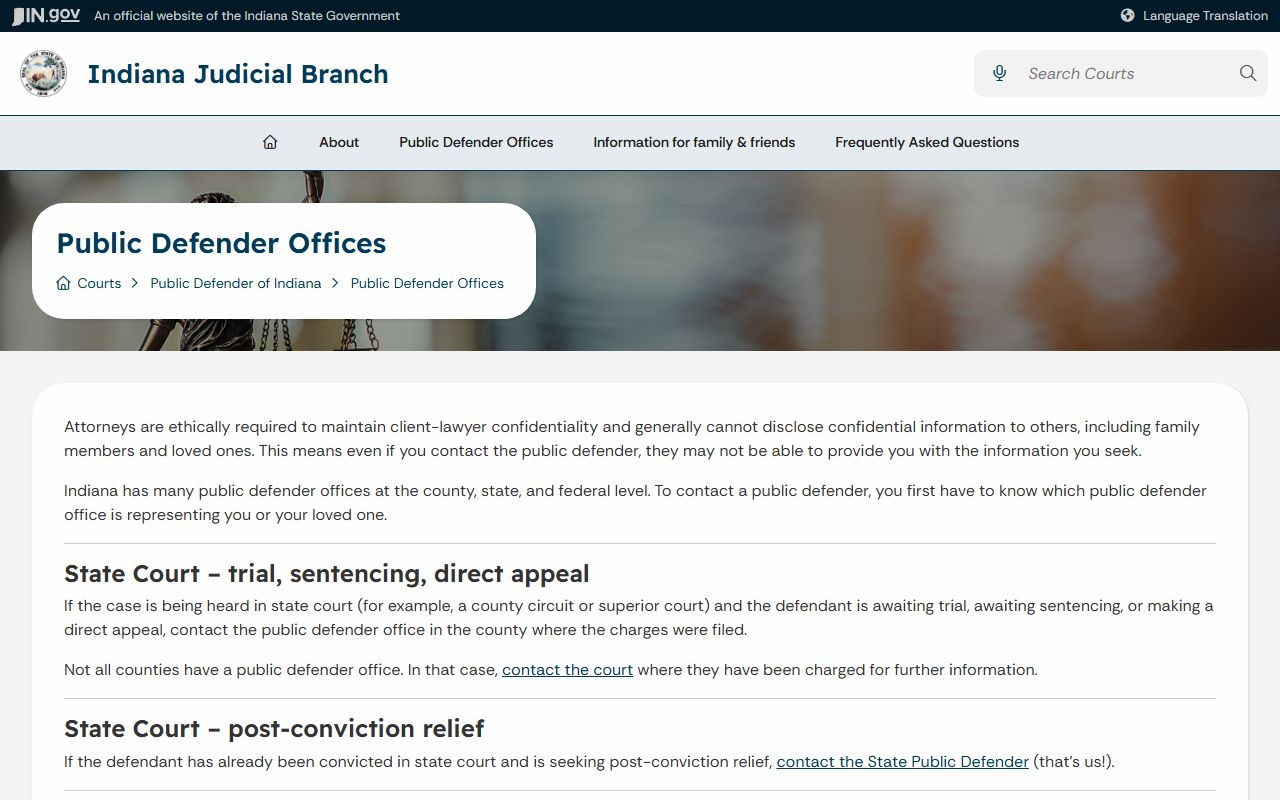
Public-defender context helps explain counsel entries in a criminal docket, but counsel records and court case records remain separate files.
Note: A criminal court record can be public and still omit sensitive identifiers, sealed filings, juvenile information, protected-party details, or documents restricted by court rule.